
Growth vs. Value

Growth Stocks
Growth stocks are considered stocks that have the potential to outperform the overall market over time because of their future potential. These stocks often demand a high price relative to current earnings due to the anticipated future growth rate. Much of the tech names that dominate the current market were once fledgling growth companies, with many still displaying significant growth characteristics despite their mammoth growth over the years.
- More “expensive”: Their stock prices are high relative to their sales or profits. This is due to the expectation of future profits.
- Riskier: They tend to be less established companies, adding to the uncertainty of future returns. They are expensive now because investors expect a significant upside. However, if growth plans don’t materialize, the price could plummet.
Value Stocks
Value stocks are not simply “cheap stocks”. They are classified as stocks that are currently trading below their intrinsic value (what they are really worth) and will, therefore, provide a superior return over time.
- Less “expensive”: Their stock prices are low relative to their fundamentals when compared to growth stocks.
- Less “risky”: They are typically more well-established businesses with a proven ability to generate profits based on a proven business model. That being said, investors must be careful not to fall into the ‘Value trap’ and keep in mind that these stocks may be cheap for a reason.
So, Which Is Better?
Historically speaking, value has outperformed growth over extended periods. Based on a study from Bank of America/Merrill Lynch over a 90-year period, growth stocks returned an average of 12.6% annually since 1926 with value stocks generated an average return of 17% per year over the same timeframe.
Since 2009, the tides have changed somewhat with value investing underperforming its growth counterpart. The spread in valuations is now at the widest point in at least 25 years. The value bulls have re-emerged from hiding, adamant that ‘value’ outperformance is immanent.
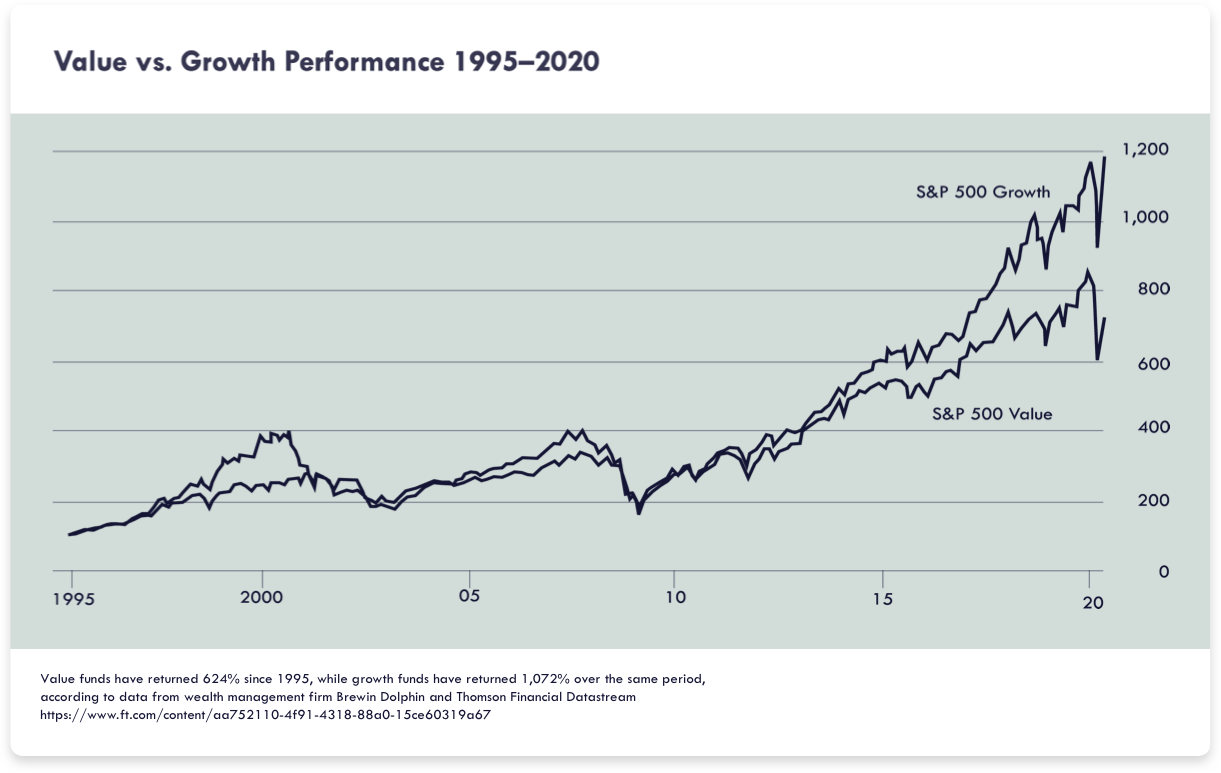
There is no doubt that the valuation gap between growth and value does represent food for thought with more and more investor wondering when this dynamic might change but basing your investment approach solely on the idea that value stocks have recently underperformed and, therefore, should outperform in the near future is a shallow investment thesis.
While there is no way of knowing if and when the much anticipate reversion to the mean will take place for value stocks, history has shown us some distinct performance patterns.
Regardless of which type of investor you are, there may be a place for both growth and value stocks in your portfolio. At the end of the day, we are all seeking quality companies at a reasonable price, so try not to get too caught up in the weeds on this one.
- Growth stocks, in general, have the potential to perform better when interest rates are falling, allowing for cheaper financing of their growth. However, they may also be the first to be punished when the economy is cooling.
- Value stocks, often stocks of cyclical industries, may do well early in an economic recovery but are typically more likely to lag in a sustained bull market.