
Private Equity – All you need to know

Private Equity
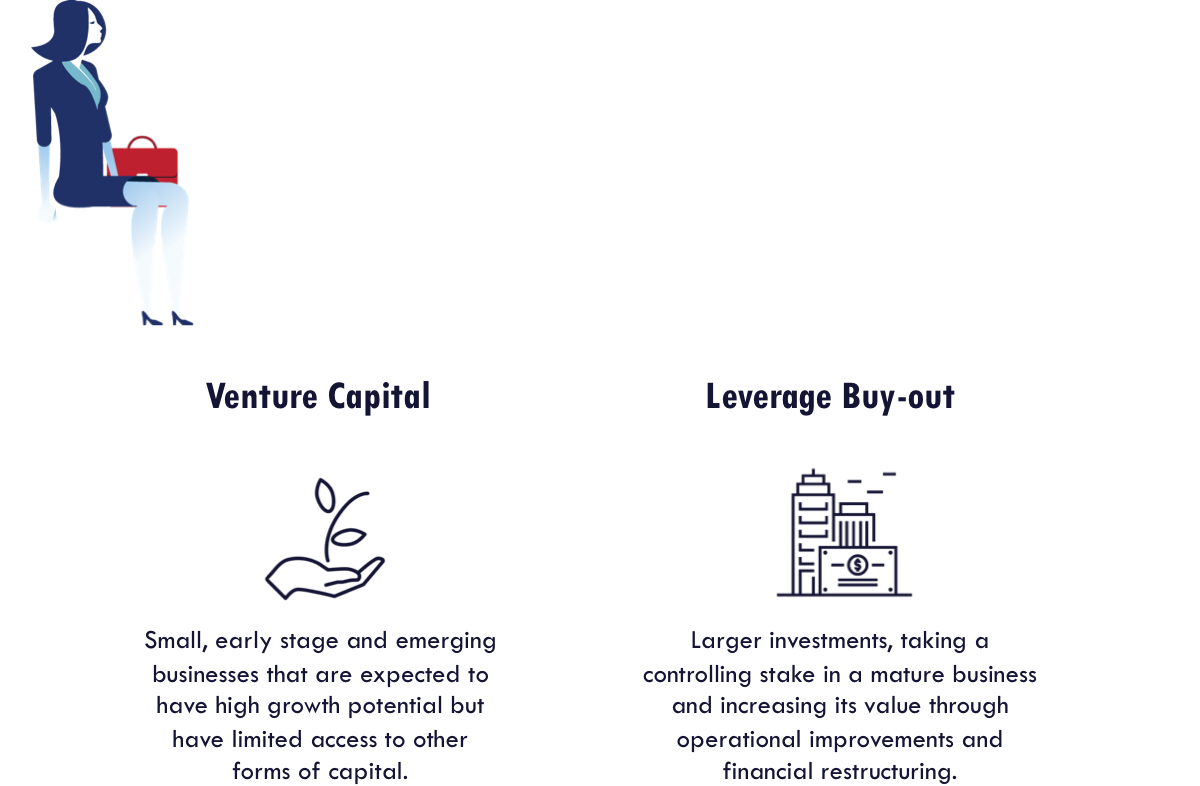
A private equity investment is a type of Alternative Investment whereby Individuals own a portion of a company that is not publicly owned, quoted, or traded on a stock exchange. Private equity investment strategies range from venture capital investments to leveraged buy-outs.
By its very nature, private equity possesses distinct characteristics that set it apart from public equity.
Benefits
Diversification
The factors that drive returns in public equity markets have little impact on private equity, enhancing private equity’s diversification potential.
Long-term Focus
Private ownership enables long-term strategic focus as opposed to the public market’s obsession with quarterly earnings. This “patient” perspective has the potential to generate significant returns for private equity investors.
The availability of private capital and the burden of regulation within public markets has resulted in billion-dollar private companies staying private for longer. The number of publicly listed U.S. companies has been cut in half from a peak of over 8,000 in 1996. This trend has resulted in a larger portion of a company’s growth phase taking place prior to going public, which has functioned to increase demand and interest within the private equity sector over time.
Attractive Returns
Private equity has exhibited attractive performance on both a riskadjusted and an absolute basis. The illiquidity premium in private equity has produced an additional 4%-6% per year over public equity markets.

Drawbacks
Despite the recent growth within the private equity space. This asset class will not be suitable for everyone.
Initial Negative Cash Flow
Private equity can offer tremendous capital appreciation long-term but typically offers little to no cash flow for the first 2-7 years given the initial capital-intensive growth phase of many of these private companies.

Illiquidity
Many private equity investments can have a lock-up period of 6-8 years. Investors are not allowed to redeem or sell shares during this time. Once this lock-up period has passed, the redemption windows will typically be quarterly compared to the daily liquidity in public markets.
No Direct Investments For Retail Investors
Direct investments into these private companies are typically exclusive to institutional investors or high net worth individuals. A retail investor looking to invest in private equity can invest through a private equity firm. These firms will raise investor capital and invest on their behalf in private companies that show great promise and potential.
Private Equity vs. Public Equity
As access to private funding increases, companies will continue to pursue their business objectives without the costs and distractions associated with operating in the public spotlight. More than ever before, the rapid growth companies experience and the value created by that growth is occurring pre- IPO (initial public offering), creating ample opportunity within the private equity space.
Private Equity
- Uses private information to make decisions
- Investors as operators
- Private concentrated ownership
- Multi-year strategic planning
Public Equity
- Publicly available information
- More passive investors
- Broad public ownership
- Quarterly earnings focus